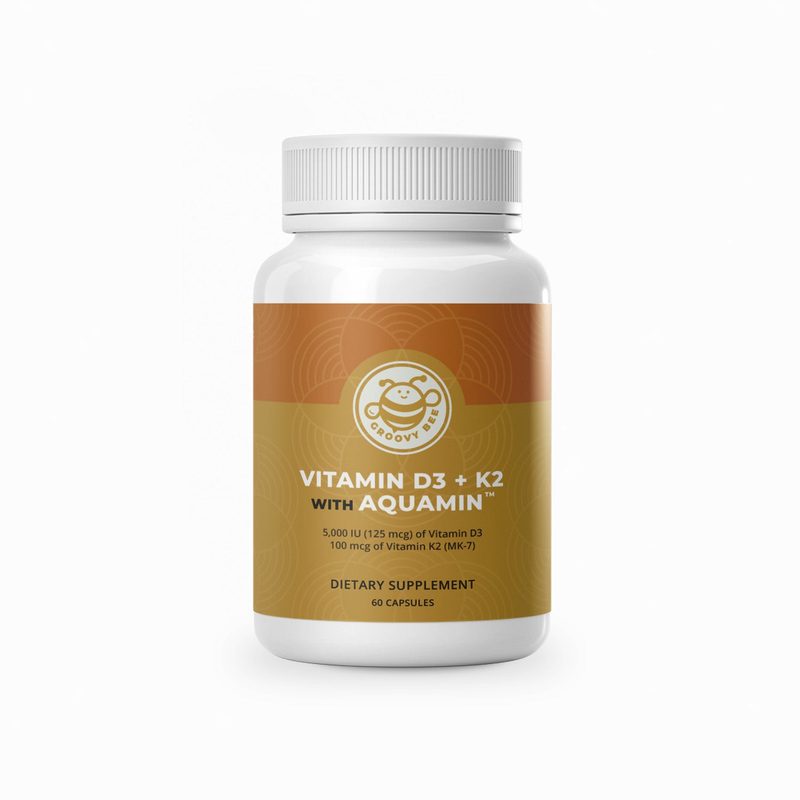
Vitamin D3 and its forms
Vitamin D3 supplements contain cholicalciferol, which is the name given to the vitamin D3 compound itself.[1] Vitamin D3 capsules contain gelatin, and the same capsules contain rice bran oil as well.[2][3] Vitamin D3 capsules contain no milk, so the gelatin and rice bran oil are the materials named in the capsule.[4][2][3] A tincture described in the sources contains vitamin E, which is included for enhanced absorption and shelf life.[5] These facts describe what the vitamin D3 materials contain and what is added to them, without going beyond the listed ingredients.[4][2][1][3][5]
Vitamin K2 sources and forms
Vitamin K2 is a nutrient, and MK-4 is one form of vitamin K2.[6][7] Natto contains vitamin K2, which places the nutrient in a fermented soybean food.[8] Vitamin K2 does not come from green leafy vegetables, according to the facts provided.[9] The pancreas contains the second highest concentration of vitamin K2 in the body, which is a fact about where the nutrient is found in the body.[10] These facts set out the form, the food source, and the body location associated with vitamin K2.[6][7][8][10][9]
Aquamin and its uses
Aquamin is currently used in various human consumption products in Europe, Asia, Australia, and North America.[11] That fact places Aquamin in products across four regions and describes it as an ingredient used in items made for human consumption.[11] The facts describe Aquamin only in terms of where it is used, and they do not state what it is made from or how it is prepared.[11] Taken together, the facts cover the contents of vitamin D3 capsules and a tincture, the form and sources of vitamin K2, and the regional use of Aquamin in consumer products.[4][2][1][3][5][6][7][8][10][9][11]