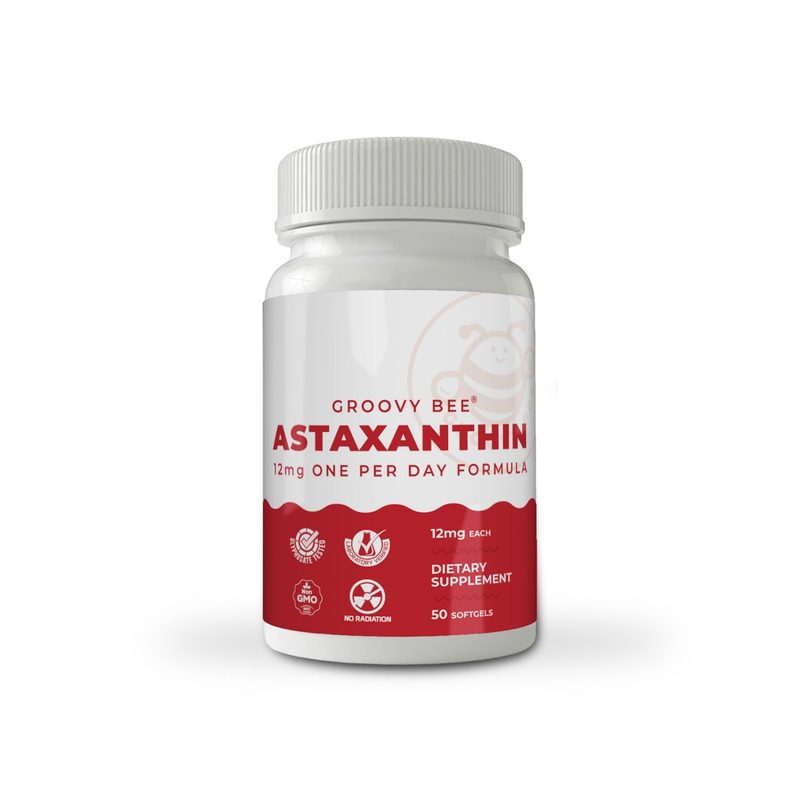
What astaxanthin is
Astaxanthin is a naturally occurring carotenoid, and it is described as a potent antioxidant.[1][2] Astaxanthin contains antioxidants, and it is fat-soluble.[3][4] Astaxanthin is a carotenoid pigment, and Haematococcus is grown for this pigment.[5] Astaxanthin is derived from microalgae, which places its origin among microscopic algae rather than among land plants.[6] Because astaxanthin is fat-soluble, it is described in the facts as a substance that dissolves in fat rather than in water.[4] The facts describe astaxanthin both as a carotenoid and as a pigment, and both descriptions apply to the same substance.[1][5]
Where astaxanthin is found
Astaxanthin is found in salmon, and wild-caught salmon contains astaxanthin.[7][8] The facts state that astaxanthin is derived from microalgae, and that Haematococcus is grown for astaxanthin.[6][5] Astaxanthin is used as a feed ingredient for commercially grown livestock, which is a separate use from its presence in salmon.[9] Wild-caught salmon contains astaxanthin, while the astaxanthin used as a feed ingredient is described as an ingredient for commercially grown livestock.[8][9] The facts link astaxanthin to salmon, to microalgae, and to Haematococcus, and they describe it as a naturally occurring carotenoid in each of these settings.[1][7][6][5]
How astaxanthin is described
Astaxanthin is a naturally occurring carotenoid, and it is also described as a potent antioxidant.[1][2] Astaxanthin contains antioxidants, and the facts list this as a property of the substance itself.[3] Astaxanthin is fat-soluble, and the facts present this as one of its characteristics.[4] Astaxanthin is derived from microalgae, and Haematococcus is grown for astaxanthin, a carotenoid pigment.[6][5] Astaxanthin is used as a feed ingredient for commercially grown livestock.[9] The facts describe astaxanthin as a carotenoid, as a pigment, as an antioxidant, and as fat-soluble, and they place it in salmon, in microalgae, and in Haematococcus.[1][5][2][4][7][6]